The short answer
Hotel SEO should connect rooms, location, experience and destination intent. The aim is not only traffic. The aim is to help the right guest feel confident booking direct.
Boutique hotels compete with booking platforms, travel guides, social discovery and local searches. A direct-booking strategy needs search-friendly pages that also protect the mood of the brand.
Make the Location More Than an Address
Guests search around neighbourhoods, events, restaurants, transport and experiences. Build destination content that explains why your location matters. Link that content to rooms, offers and direct booking paths.
Give Every Room Type a Useful Page
Room pages should include clear details, original photography, amenities, occupancy, views where relevant and the type of stay the room suits. Avoid hiding critical information inside a booking widget only.
Use Visual Content to Own the Experience
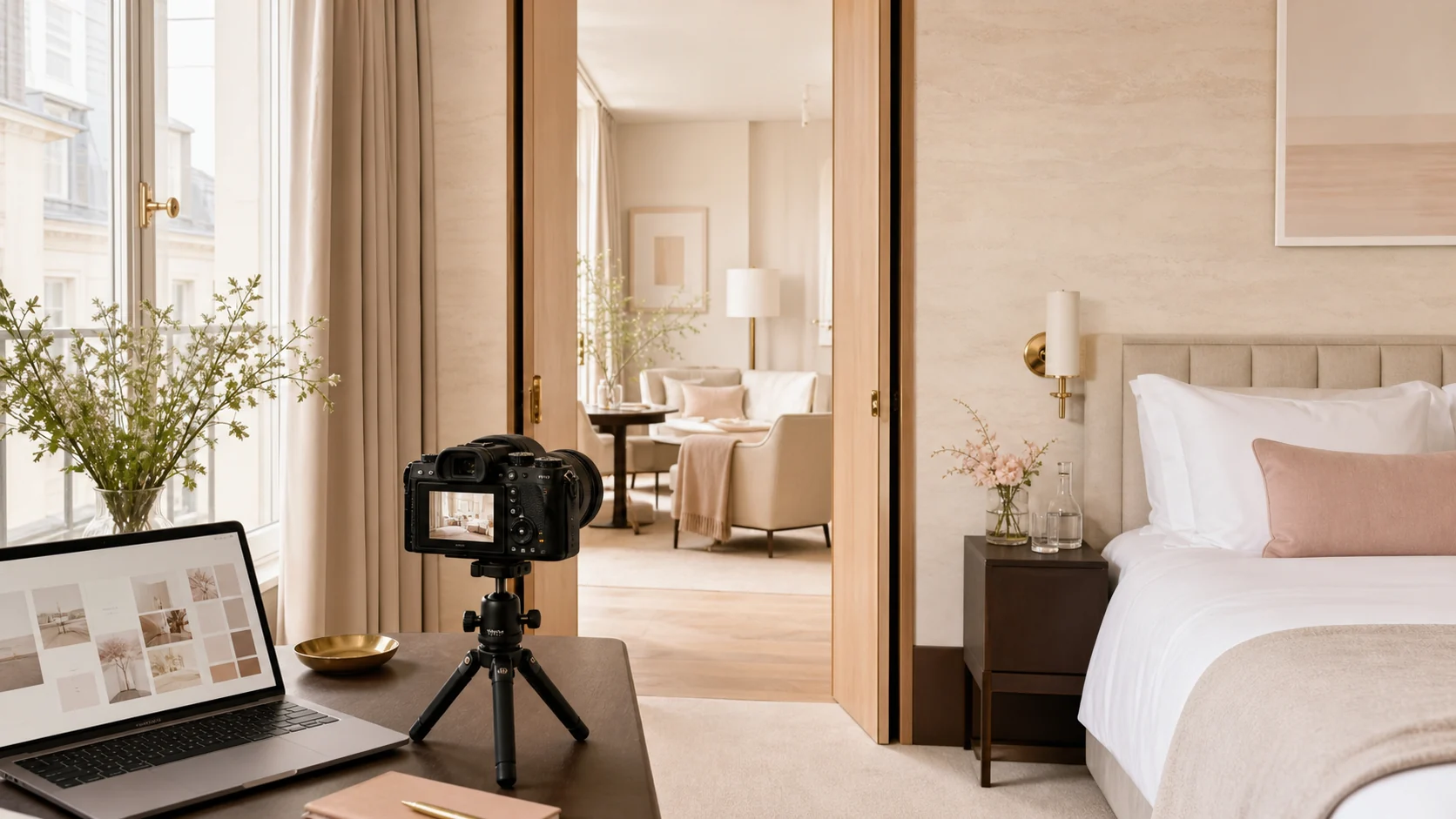
Hotels need imagery that works across social, search and booking pages: entrance, rooms, bathrooms, dining, details, team, local area and seasonal atmosphere. Consistent content helps the hotel look active and current.
Build Local Guides That Match the Guest
A luxury guest does not need a generic tourist list. They need curated recommendations that fit the hotel's positioning: quiet cafés, galleries, wellness, shopping, dining, family-friendly routes or event-weekend plans.
- Create room pages that searchers and guests can understand.
- Use neighbourhood and experience guides to capture destination intent.
- Keep Google Business Profile photos current and seasonal.
- Repurpose shoot assets across rooms, social, email and journal posts.
- Connect every content path back to direct booking or enquiry.