The short answer
A strong luxury hotel content strategy treats every shoot as a connected library for room pages, destination SEO, social media, editorial coverage and direct-booking reassurance. The goal is not constant posting. It is consistent evidence of the stay guests can expect.
Luxury travellers move between visual inspiration and detailed evaluation. They may discover a hotel through an Instagram Reel, compare suites in search, ask an AI assistant for a quiet boutique stay near a particular neighbourhood, then return to the hotel's website to confirm the details. Content must remain coherent across that entire journey.
Begin With the Guest Decision, Not the Content Format
Before planning photographs or Reels, identify the decisions a potential guest needs to make. Can they understand the difference between room categories? Is the atmosphere quiet or social? What is within walking distance? Does the hotel suit a celebration, business stay, family trip or design-led weekend?
Each priority guest and stay occasion should connect to a clear page, relevant visual proof and an appropriate booking route. Social content can create desire, but owned website content must resolve uncertainty.
Build a Hospitality Content Architecture
| Content pillar | What to capture | Where it works |
|---|---|---|
| Rooms and suites | True proportions, details, outlook, bathroom, arrival and evening mood | Room pages, booking engine, carousels and short video |
| Service and people | Welcome, concierge knowledge, housekeeping detail and dining service | Brand film, social stories, careers and about page |
| Food and drink | Signature dishes, breakfast rhythm, bar atmosphere and chef perspective | Dining pages, local search, PR and campaign content |
| Neighbourhood | Walkable landmarks, independent places, seasonal routes and local expertise | Destination guides, organic search, email and social saves |
| Stay occasions | Weekend, celebration, work stay, wellness or private event journey | Landing pages, paid campaigns, packages and creator briefs |
Shoot for a Library, Not a Single Campaign
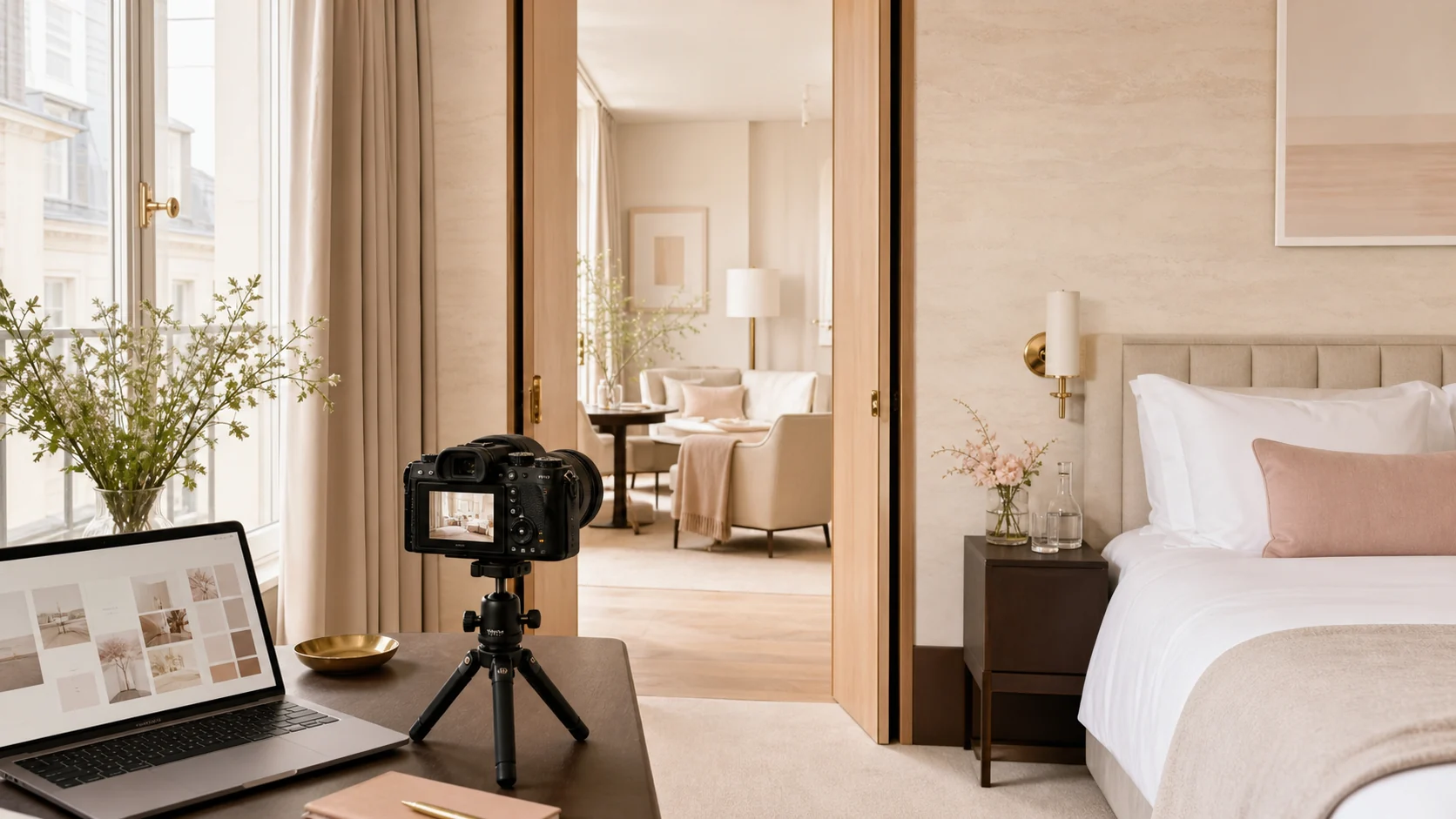
A production day should cover multiple crops and durations. Capture horizontal hero frames for the website, vertical sequences for short-form video, clean room details for booking pages and natural service moments for brand storytelling. Keep a shot register with property area, room type, talent permissions, season and intended use.
Luxury does not require every frame to look staged. Guests respond to specificity: the view at breakfast, how evening light enters a suite, the texture of the bed linen, a concierge recommendation or the route from the lobby to a private dining room.
Connect Social Discovery to Searchable Pages
Every social series should have an owned destination. A Reel about a design suite should link to that suite, not the generic homepage. A neighbourhood carousel should support a substantial destination guide. A chef interview should connect to a current dining page with opening information and a reservation route.
This approach improves the guest journey and creates stronger internal links. It also prevents valuable information from existing only inside social platforms where it may be difficult to find later.
Create Destination Content With First-Hand Value
Generic “things to do” articles are easy to reproduce and rarely express the hotel's point of view. Build guides around genuine local knowledge and guest intent: a design-led weekend, a quiet morning route, independent shopping near the hotel or a one-day itinerary between meetings.
Name the team member or local contributor behind the recommendation where appropriate. Keep opening details and seasonal references current. Original photography and practical route information add experience that an aggregated list cannot.
Make the Property Legible to Search and AI Systems
Keep the hotel's official name, address, telephone number, geo details, check-in information and key amenities consistent across the website, business profiles, booking partners and reputable travel listings. Use appropriate Hotel or LodgingBusiness structured data where it accurately reflects visible information.
There is no special markup that guarantees inclusion in AI answers. The same foundations apply: crawlable pages, useful visible text, accurate structured data, high-quality media, internal links and current business information. Avoid hiding essential room or policy information inside images or downloadable PDFs.
A 90-Day Luxury Hotel Content Plan
- Month 1, clarify: audit room pages, brand facts, search demand, guest questions, imagery gaps and booking paths.
- Month 2, produce: capture the core property library, priority stay occasions, service details and destination stories.
- Month 3, distribute: rebuild priority pages, publish the first guide, schedule social series, update profiles and measure assisted bookings.
Measure More Than Social Reach
Track saves, shares and qualified profile visits, but connect them to commercial measures. Useful indicators include visits from social to room pages, organic visibility for destination and property searches, booking-engine starts, email sign-ups, assisted direct bookings and enquiries for dining or events.
Review which assets support multiple channels. A content library becomes more valuable when one production supplies the website, social calendar, press requests, email, business profiles and seasonal campaigns without making the brand feel repetitive.
Frequently Asked Questions
How often should a luxury hotel produce new content?
Plan one substantial seasonal production around each major campaign or experience change, supported by lighter monthly capture. The schedule should reflect rooms, dining, events, destination stories and current offers.
What hotel content supports direct bookings?
Accurate room and suite imagery, clear experience pages, useful location guidance, dining and wellness details, current policies and a simple booking route help guests evaluate the stay with confidence.
Can the same hotel content work for social media and SEO?
Yes, when the production is planned as a library. A hero film can become social edits, while the same shoot provides website images, destination guides, room-page media and business-profile updates.
Further reading: Google Search Central: AI features and your website and Bing Webmaster: sitemaps in AI-powered search.